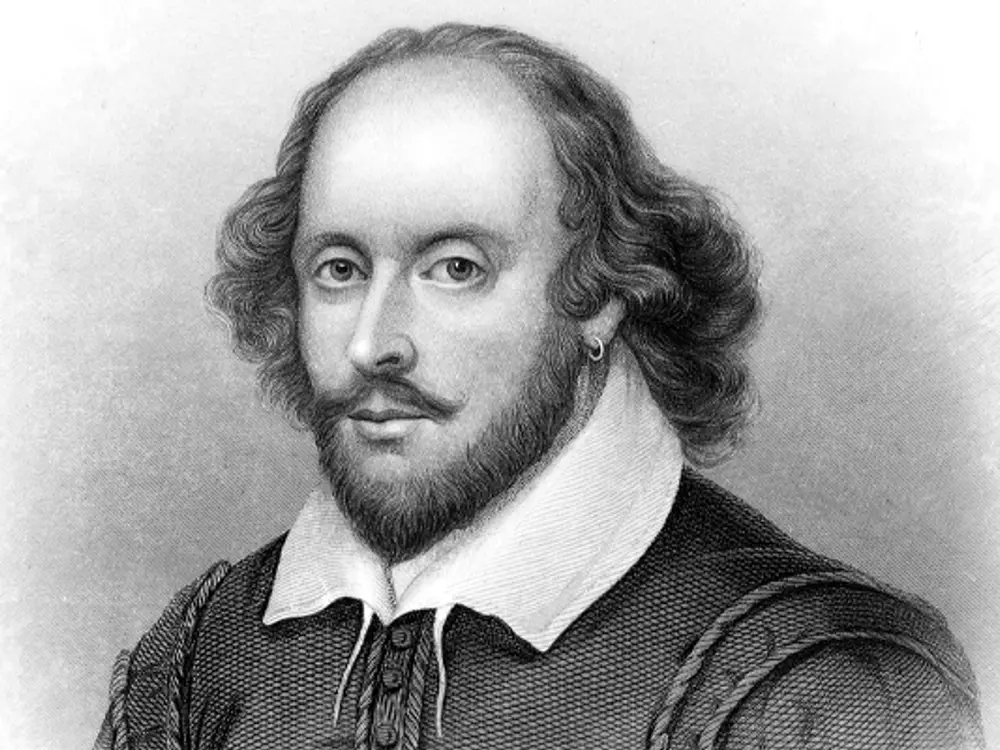
Shakespeare wrote 154 sonnets. Thomas Thorpe published them in 1609. The speaker addresses a young man, the Fair Youth, and a woman, the Dark Lady, on love, time, mortality, and the immortalising power of verse.
About Shakespeare’s Sonnets
Shakespeare wrote the sonnets in the 1590s and early 1600s, though scholars dispute the exact dates. Thomas Thorpe collected and published them in quarto form in 1609 as Shake-Speares Sonnets. Each English (or Shakespearean) sonnet runs fourteen lines of iambic pentameter: three quatrains plus a closing couplet, rhyming ABAB CDCD EFEF GG.
Editors split the sequence into two groups. Sonnets 1 to 126 speak to the Fair Youth: beauty, time, procreation, the immortalising power of verse. Sonnets 127 to 154 turn to the Dark Lady, a darker and more sensual figure. Two minor figures also feature: a Rival Poet and a young man’s mistress.
Browse Shakespeare’s Sonnets on English History
Click any title below to read the full poem.
| Sonnet | Opening line |
|---|---|
| Sonnet 1 | From fairest creatures we desire increase |
| Sonnet 2 | When forty winters shall beseige thy brow |
| Sonnet 3 | Look in thy glass, and tell the face thou viewest |
| Sonnet 4 | Unthrifty loveliness, why dost thou spend |
| Sonnet 5 | Those hours, that with gentle work did frame |
| Sonnet 6 | Then let not winter’s ragged hand deface |
| Sonnet 7 | Lo! in the orient when the gracious light |
| Sonnet 8 | Music to hear, why hear’st thou music sadly |
| Sonnet 9 | Is it for fear to wet a widow’s eye |
| Sonnet 10 | For shame! deny that thou bear’st love to any |
| Sonnet 11 | As fast as thou shalt wane, so fast thou growest |
| Sonnet 12 | When I do count the clock that tells the time |
| Sonnet 13 | O, that you were yourself! but, love, you are |
| Sonnet 14 | Not from the stars do I my judgment pluck |
| Sonnet 15 | When I consider every thing that grows |
| Sonnet 16 | But wherefore do not you a mightier way |
| Sonnet 17 | Who will believe my verse in time to come |
| Sonnet 18 | Shall I compare thee to a summer’s day |
| Sonnet 19 | Devouring Time, blunt thou the lion’s paws |
| Sonnet 20 | A woman’s face with Nature’s own hand painted |
| Sonnet 21 | So is it not with me as with that Muse |
| Sonnet 22 | My glass shall not persuade me I am old |
| Sonnet 23 | As an unperfect actor on the stage |
| Sonnet 24 | Mine eye hath play’d the painter and hath steel’d |
| Sonnet 25 | Let those who are in favour with their stars |
| Sonnet 26 | Lord of my love, to whom in vassalage |
| Sonnet 27 | Weary with toil, I haste me to my bed |
| Sonnet 28 | How can I then return in happy plight |
| Sonnet 29 | When in disgrace with fortune and men’s eyes |
| Sonnet 30 | When to the sessions of sweet silent thought |
| Sonnet 31 | Thy bosom is endeared with all hearts |
| Sonnet 32 | If thou survive my well-contented day |
| Sonnet 33 | Full many a glorious morning have I seen |
| Sonnet 34 | Why didst thou promise such a beauteous day |
| Sonnet 35 | No more be grieved at that which thou hast done |
| Sonnet 36 | Let me confess that we two must be twain |
| Sonnet 37 | As a decrepit father takes delight |
| Sonnet 38 | How can my muse want subject to invent |
| Sonnet 39 | O! How thy worth with manners may I sing |
| Sonnet 40 | Take all my loves, my love, yea take them all |
| Sonnet 41 | Those pretty wrongs that liberty commits |
| Sonnet 42 | That thou hast her it is not all my grief |
| Sonnet 43 | When most I wink, then do mine eyes best see |
| Sonnet 44 | If the dull substance of my flesh were thought |
| Sonnet 45 | The other two, slight air, and purging fire |
| Sonnet 46 | Mine eye and heart are at a mortal war |
| Sonnet 47 | Betwixt mine eye and heart a league is took |
| Sonnet 48 | How careful was I when I took my way |
| Sonnet 49 | Against that time, if ever that time come |
| Sonnet 50 | How heavy do I journey on the way |
Major Themes of the Sonnets
The first seventeen, the Procreation Sonnets, urge the young man to marry and father children to carry his beauty forward. From Sonnet 18 the speaker pivots to poetry itself as the carrier of immortality: So long as men can breathe, or eyes can see, / So long lives this, and this gives life to thee.
The speaker fights Time with verse. The Dark Lady sonnets turn to physical desire, jealousy, betrayal, self-loathing. Romantic love here runs troubled, the opposite of the idealised love in the Fair Youth poems.
Frequently Asked Questions
How many sonnets did Shakespeare write?
Shakespeare wrote 154 sonnets. Thomas Thorpe collected and published them in 1609 in a quarto titled Shake-Speares Sonnets, which also prints a long narrative poem, A Loveru2019s Complaint. Sonnets 138 and 144 had appeared earlier in the 1599 anthology The Passionate Pilgrim. Most scholars place composition in the 1590s, with revisions into the early 1600s. Exact dates remain unknown. Shakespeare also wrote sonnets inside his plays, including the prologue to Romeo and Juliet.
What is the form of a Shakespearean sonnet?
A Shakespearean (or English) sonnet runs fourteen lines of iambic pentameter, rhyming ABAB CDCD EFEF GG. Three quatrains of four lines each precede a closing rhymed couplet. Shakespeare pushes the argument forward through each quatrain, then turns or resolves it in the couplet. The earlier Italian or Petrarchan sonnet splits its fourteen lines instead into an octave and a sestet.
Who is the Fair Youth in Shakespeare’s sonnets?
The Fair Youth is the young man Shakespeareu2019s speaker addresses across the first 126 sonnets. His identity remains unknown. Scholars argue between two candidates: Henry Wriothesley, the third Earl of Southampton, and William Herbert, the third Earl of Pembroke. Both patronised Shakespeare and match the poemsu2019 picture of a noble young man of striking beauty. Readers still speculate about the dedication to Mr. W.H. without resolution. Most modern readers treat the Fair Youth as a literary figure, not a historical man.
Who is the Dark Lady?
The Dark Lady is the woman Shakespeareu2019s speaker addresses in sonnets 127 to 152. She has dark hair, dark eyes, and a darker complexion, breaking from the fair-haired ideal of Renaissance love poetry. Their relationship turns physical, troubled, bitter. Her real-world identity remains unknown. Scholars have proposed Mary Fitton, a maid of honour to Queen Elizabeth I; Emilia Lanier, an early English woman poet; and others, without consensus. Most modern readers treat the Dark Lady, like the Fair Youth, as a fictional persona.
When were Shakespeare’s sonnets published?
The printer Thomas Thorpe published the complete sequence in 1609. The volume, Shake-Speares Sonnets, prints all 154 sonnets, then the narrative poem A Loveru2019s Complaint. Whether Shakespeare authorised it remains unknown. The dedication signed only by the printer (u2018To the only begetter of these ensuing sonnets, Mr. W.H.u2019) still puzzles readers. Sonnets 138 and 144 had appeared in The Passionate Pilgrim (1599), but the 1609 quarto holds the only authoritative full text.
Related Resources
- Shakespeare hub on English History
- Queen Elizabeth I (Shakespeare’s monarch from 1564 to 1603)
- Anne Boleyn (Elizabeth I’s mother, central to the Tudor era that produced Shakespeare)
- Poets covered on English History
Link/cite this page
If you use any of the content on this page in your own work, please use the code below to cite this page as the source of the content.
Link will appear as Hanson, Marilee. "Shakespeares Sonnets: All 154 Poems and Their Famous Opening Lines" https://englishhistory.net/shakespeare/shakespeares-sonnets-list/, May 9, 2026